Shenzhen Maternity and Child Healthcare Hospital was established in 1979 and merged with Shenzhen Women & Children‘s Hospital in 2002. It has now developed into a renowned Grade-A Tertiary Maternity & Child Healthcare Hospital integrating healthcare, prevention, medical treatment, teaching, and scientific research. It serves as the Women & Children’s Medical Center of Southern Medical University. In recent years, it has been honored as an Advanced Collective of Guangdong Province’s Healthcare System and an Advanced Collective in the Implementation of the Women’s and Children’s Development Program of Guangdong Province, and has repeatedly received an A++ rating in the National Performance Evaluation of Maternity & Child Healthcare Institutions.
The hospital operates two campuses — Hongli and Fuqiang — covering a total area of 35,000 square meters, with a construction area of 140,000 square meters and 1,150 beds. It has a staff of over 2,400, including 191 senior specialists, 301 associate senior specialists, and 36 high-level talents. In 2025, the hospital recorded 2.2377 million outpatient and emergency visits, 71,500 inpatient admissions, and 20,900 deliveries, ranking first citywide in both delivery volume and total assisted reproductive services. The number of extremely preterm infant admissions and their survival rate are among the highest in China. The hospital also operates a model childcare center and has been designated to manage Shenzhen Third Children’s Hospital, which has a planned capacity of 500 beds.
The hospital is committed to providing full-cycle, whole-process, and comprehensive quality medical and healthcare services for women and children, and has built a cluster of key specialties centered on obstetrics, gynecology, reproductive medicine, neonatology, and pediatrics. It currently boasts two national key clinical specialties (neonatology and obstetrics), three national characteristic healthcare specialties (newborn care, maternal healthcare, and traditional Chinese medicine in maternal and child healthcare), and seven Guangdong Provincial Key Clinical Specialties/Characteristic Healthcare Specialties (neonatology, obstetrics, pediatrics, child healthcare, traditional Chinese medicine gynecology, newborn care, and menopausal healthcare). The hospital is the Guangdong Provincial Critical Maternal Care Center, the Provincial Critical Newborn Care Center, the Provincial Technical Guidance Center for Prenatal Diagnosis, and the host institution for four Shenzhen municipal quality control centers (obstetrics, neonatology, assisted reproductive technology, and traditional Chinese medicine gynecology).
The hospital actively fulfills its public health management functions for maternal and child health. With strong government support and investment, it has established and refined a three-tier maternal and child healthcare network comprising municipal- and district-level maternity and child healthcare hospitals, general hospitals, and community health centers, and implements over 20 public health programs focused on maternal and child health. The city’s key maternal and child health indicators have consistently remained at historically low levels, ranking among the best in China. The hospital also took the lead in establishing the "1+1+10" Shenzhen Maternal and Child Healthcare Consortium, which includes the hospital itself, Shenzhen Children’s Hospital, and district-level maternity and child healthcare institutions. Leveraging its strengths in talent, technology, and operational management, the consortium is accelerating the development of an integrated, high-quality, and efficient maternal and child health service system, and continuously promoting the expansion, quality improvement, and balanced regional distribution of quality maternal and child healthcare resources.
The hospital continues to advance the integrated development of clinical care, education, and research. It has established a range of research support platforms, including the Maternal and Child Health Big Data Center, Biobank, and Shared Laboratories. It is the Shenzhen Branch of the National Clinical Research Center for Obstetrics, Gynecology and Reproductive Diseases, the Shenzhen Clinical Research Center for Obstetrics, Gynecology and Reproductive Diseases, the Shenzhen Key Laboratory of Pregnancy Diseases and Maternal and Infant Health, the Shenzhen Key Laboratory of Birth Defects Prevention and Control, the Shenzhen Maternal and Child Health Management Concept Validation Center for the Whole Life Cycle. It has been awarded major projects by the Ministry of Science and Technology and the Shenzhen Medical Academy of Research and Translation, among others. In addition, the hospital is one of the first national prenatal ultrasound training bases, the national neonatal-perinatal medicine specialist training base, a Guangdong Provincial Postdoctoral Innovation Practice Base, and a Shenzhen specialist training base for obstetrics, gynecology, and pediatrics. It is also a teaching hospital affiliated with Southern Medical University, Sun Yat-sen University, and other higher education institutions, providing professional training for maternal and child health specialists from across China.
The Hospital Party Committee plays a leading role in setting the overall direction, coordinating major initiatives, making key decisions, advancing reform, and ensuring effective implementation, while adhering to scientific, democratic, and law-based decision-making. The hospital attaches great importance to Party building and cultural development. It strengthens humanistic care, continuously improves patient satisfaction, and promotes the well-being of its staff. It pioneered the Holiday Care Program for Employees’ Children and the Comprehensive Competency Development Program for Young Employees within the healthcare system. The hospital also regularly organizes cultural and recreational activities, including theatrical performances, singing competitions, and Youth Forums. Through these initiatives, the hospital has developed a distinctive institutional culture that is widely recognized by both staff and patients, providing strong cultural and organizational support for its high-quality development.
Looking ahead, the hospital remains committed to putting the health of women and children at the center of its work and pursuing high-quality development. It is advancing the implementation of its overall “333” Strategy and “345” Research Strategy. Rooted in Shenzhen and serving the Greater Bay Area, the hospital is accelerating its development into a high-level, smart, and research-oriented maternal and child healthcare hospital that is nationally leading and internationally influential, striving to provide women and children with a stronger sense of fulfillment, more sustainable happiness, and a greater sense of security.
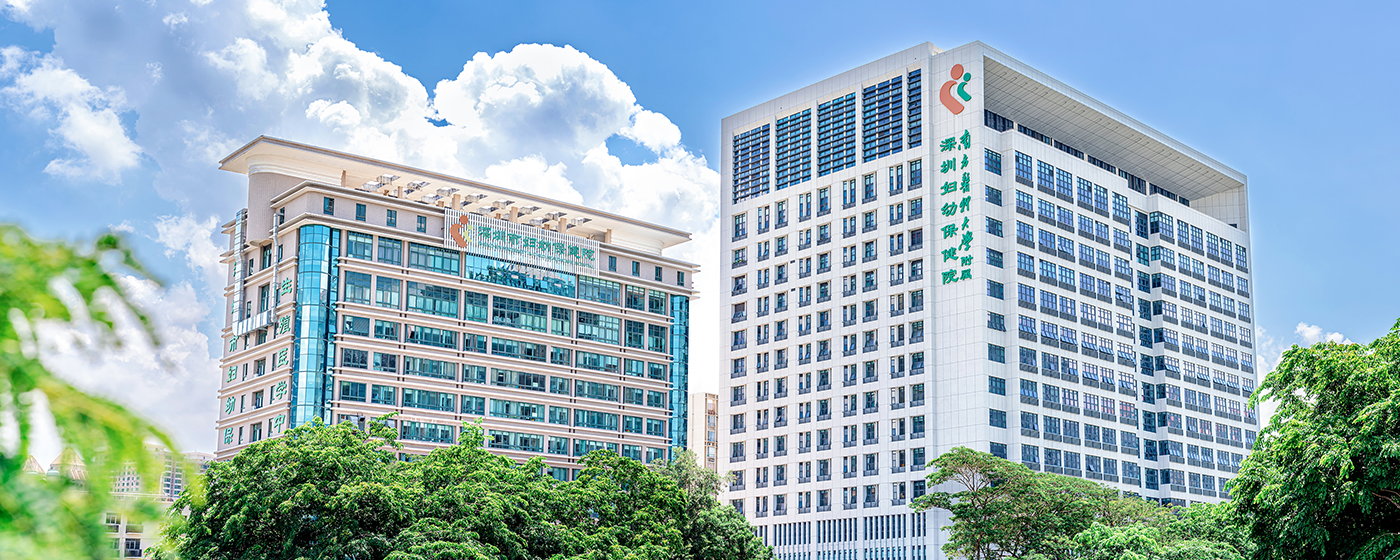
Fuqiang Campus
Address: No. 3012 Fuqiang Road, Futian District, Shenzhen (深圳市福田区福强路3012号)
Tel:82889999(Main switchboard) 82889999-3394(Information desk) 83360642(Emergency department)

Hongli Campus
Address: No. 2004 Hongli Road, Futian District, Shenzhen (深圳市福田区红荔路2004号)
Tel:82889999-3394(Information desk)(8:00-12:00,14:00-17:00) 83360642(Emergency department)

Shenzhen Third Children's Hospital
Address: No. 1 Xielian Road, Longgang Subdistrict, Longgang District, Shenzhen (深圳市龙岗区龙岗街道协联路1号)
Tel:61338888
Address: No. 2004 Hongli Road, Futian District, Shenzhen (深圳市福田区红荔路2004号)
Tel:82889999 (Main switchboard)
82889999-3394 (Information desk)
83360642 (Emergency department)
Address: No. 3012 Fuqiang Road, Futian District, Shenzhen (深圳市福田区福强路3012号)
Tel:82889999-8114 (Information desk)


 search

