A sudden challenge in late pregnancy: Traveling thousands of miles in search of hope
The joy and anticipation of late pregnancy were suddenly overshadowed by an unexpected diagnosis. At 33 weeks of gestation, Ms. Cheng, from Kashgar, Xinjiang, learned that her fetus had been diagnosed with an omphalocele. The news left her and her family deeply anxious and uncertain about what to do next.
After consulting several local hospitals, the family received differing recommendations—some advised treating the condition after delivery, while others proposed termination of pregnancy. Faced with these conflicting opinions, the family felt increasingly uncertain as they searched for the best treatment option.
At this critical moment, a Shenzhen medical aid specialist working at Kashgar Maternal and Child Health Hospital recommended that the family seek further evaluation in Shenzhen. Guided by this recommendation, Ms. Cheng and her family traveled thousands of miles and arrived at the outpatient clinic of the Department of Obstetrics of the Shenzhen Maternity and Child Healthcare Hospital on Dec. 19, 2025, determined to give their unborn baby the best possible chance.
“We trust the standard of medical care in Shenzhen and had also heard about successful cases of treating babies with omphalocele here,” comented the family.
Through preliminary online research, the family learned that the hospital had extensive experience in the diagnosis and treatment of complex fetal conditions. After careful discussion, they decided to seek help from Director Li Lixian.
Expert assessment: Laying the foundation for treatment
Given the complexity of the pregnancy, multidisciplinary diagnosis and treatment were essential. The multidisciplinary team (MDT) of the hospital’s High-Risk Maternity Clinic, recognized as a national-level MDT, has established a comprehensive system encompassing high-risk pregnancy assessment, referral pathways for obstetric emergencies and critically ill patients, multidisciplinary care, and standardized management throughout pregnancy and delivery.
After receiving Ms. Cheng, Director Li immediately contacted Director He Yun and organized a multidisciplinary consultation through the High-Risk Maternity Clinic. Specialists from obstetrics, the Prenatal Diagnosis Center, neonatology, and pediatric surgery participated in the consultation.
Further advice was sought from Professor Chen Dunjin, academic leader of the obstetrics team introduced through the “Three Famous Projects” program—the Severe Maternal Rescue Center Team led by Professor Chen from the Third Affiliated Hospital of Guangzhou Medical University.
Following a comprehensive assessment, Professor Chen determined that fetal growth was generally consistent with gestational age and that no chromosomal abnormalities had been detected. He recommended a planned cesarean delivery to reduce the risk of rupture of the omphalocele sac during vaginal delivery. The neonatology and pediatric surgery teams would also be present at delivery to provide immediate neonatal resuscitation and assessment if needed.
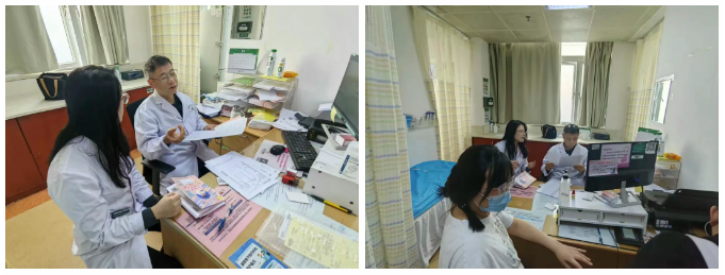
On Jan. 2, 2026, Ms. Cheng returned to the obstetrics clinic for a follow-up visit, which coincided with an on-site clinical guidance session by Professor Chen.
After carefully reviewing her complete medical history and records, Professor Chen provided Ms. Cheng and her family with a detailed explanation of her condition based on his extensive clinical experience. He clearly explained the key considerations in the perinatal management of fetal omphalocele, discussed the optimal timing of delivery, and developed a step-by-step diagnostic and treatment plan.
This clear and authoritative guidance provided much-needed reassurance, greatly easing the family’s anxiety and strengthening Ms. Cheng’s confidence as she prepared for delivery.
Efficient collaboration for a safe delivery
As the pregnancy progressed, Ms. Cheng was admitted to Ward 1 of the Department of Obstetrics at Shenzhen Maternity and Child Healthcare Hospital on Jan. 9, 2026, at 38 weeks and 1 day of gestation, with fetal omphalocele diagnosed five weeks earlier.
Tu Xinzhi, a candidate academic leader in obstetrics and Secretary of the First Party Branch of the Department of Obstetrics, took overall responsibility for coordinating the preoperative preparations. Drawing on her extensive management experience and strong coordination skills, she carefully assessed the patient’s condition, coordinated key members of the clinical teams, and organized a multidisciplinary consultation involving obstetrics, neonatology, anesthesiology, the operating room, and pediatric surgery.
Based on the conditions of both mother and fetus, the team carefully determined the timing of surgery and coordinated every stage of care to ensure that all preparations were in place.
On Jan. 15, 2026, with all preparations complete, the cesarean delivery was performed by Director Li under the on-site guidance of Professor Chen, with close collaboration among the obstetrics, anesthesiology, neonatology, pediatric surgery, and nursing teams.
Throughout the procedure, Professor Chen focused closely on maternal and neonatal safety while providing real-time clinical guidance to the medical team on key aspects of cesarean delivery in a pregnancy complicated by fetal omphalocele, as well as the management of abnormal placental findings. He also coordinated with the pediatric surgery team regarding the newborn’s subsequent treatment plan.
The baby was delivered in stable condition, weighing 2,760 grams, with Apgar scores of 10. The omphalocele was consistent with the prenatal diagnosis. Following initial stabilization and treatment, the newborn was transferred to the Department of Neonatology for further specialized care.
Multidisciplinary expertise: Precise surgical care for the newborn
Upon receiving the newborn, the Department of Neonatology immediately initiated standardized monitoring. Given the diagnosis of omphalocele and the need to ensure perioperative safety, the department promptly organized a multidisciplinary preoperative discussion involving neonatology, pediatric surgery, anesthesiology, and nursing.
Following a comprehensive assessment, the expert team determined that staged surgery was unnecessary and planned a primary repair for the following day.
During surgery, the infant was additionally diagnosed with congenital intestinal atresia accompanied by hypoplasia of the entire colon. Based on the intraoperative findings, the surgical team promptly adjusted the treatment plan and successfully performed resection of the affected bowel segment followed by primary intestinal anastomosis.
Following surgery, the newborn remained in stable condition, with good healing of the abdominal incision.
United across mountains and seas: Safeguarding health together
The successful treatment of the mother from Kashgar demonstrates the clinical expertise, effective multidisciplinary collaboration, and compassionate care of the hospital’s obstetrics team. It also reflects the continuously deepening healthcare collaboration between Guangdong and Kashgar.
In recent years, the hospital has continued to extend high-quality medical resources and expertise to border regions through team-based medical assistance programs in Xinjiang, remote specialist consultations, professional training, and other collaborative initiatives.
Life and health remain the hospital’s highest priorities, and the commitment of healthcare professionals transcends geographical boundaries. As China continues to advance the Healthy China Initiative, the hospital will remain committed to the principles of providing medical assistance to Xinjiang through scientific expertise and genuine dedication.
Working closely with our healthcare colleagues in Kashgar, we will continue to safeguard the health and well-being of every mother and newborn and contribute to stronger healthcare collaboration and solidarity among communities.
Address: No. 2004 Hongli Road, Futian District, Shenzhen (深圳市福田区红荔路2004号)
Tel:82889999 (Main switchboard)
82889999-3394 (Information desk)
83360642 (Emergency department)
Address: No. 3012 Fuqiang Road, Futian District, Shenzhen (深圳市福田区福强路3012号)
Tel:82889999-8114 (Information desk)


 search

